
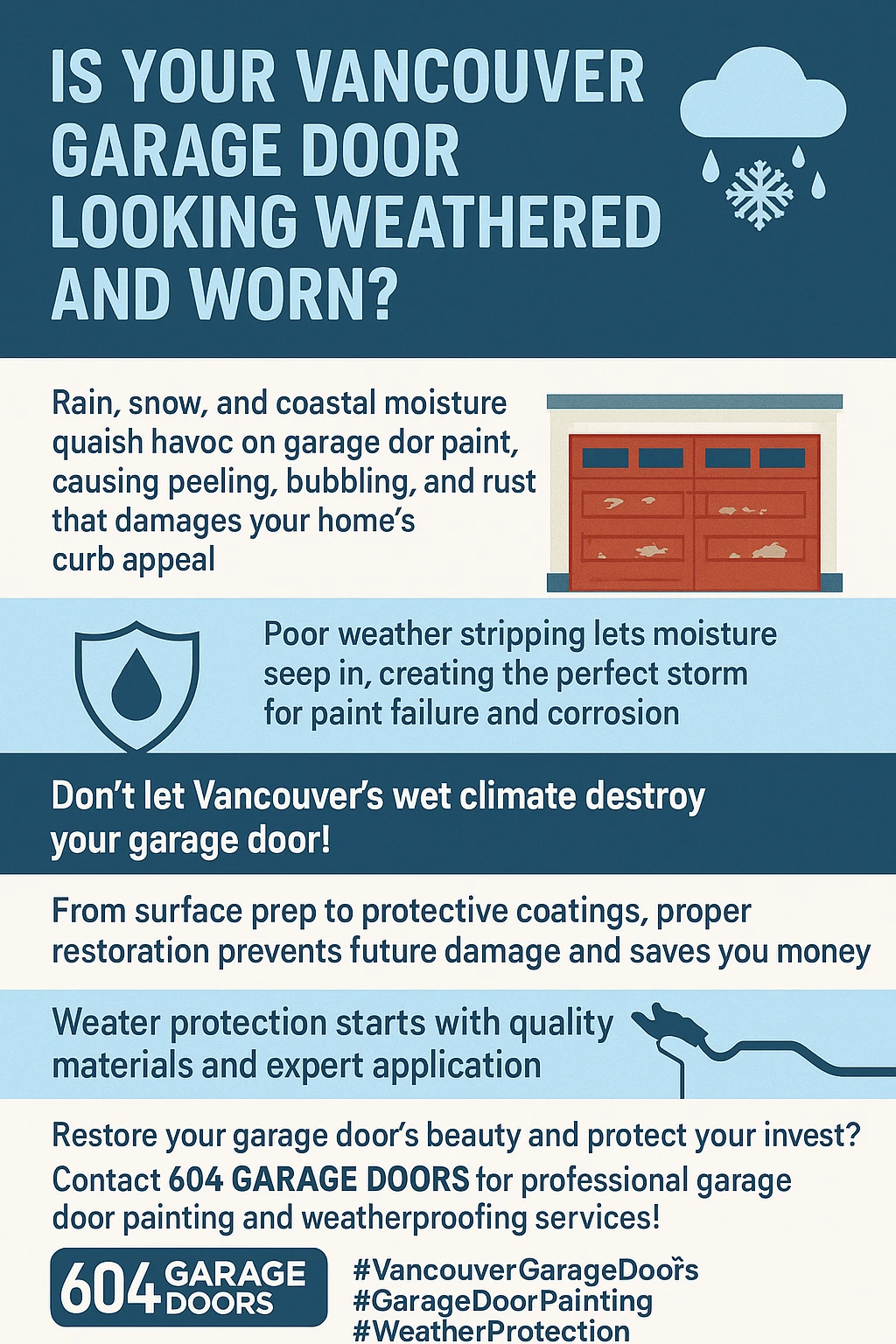
Tired of watching your Vancouver garage door paint peel and bubble like a bad sunburn? Dive into our comprehensive guide to discover how weather stripping failures and moisture infiltration cause these unsightly problems, plus learn professional restoration techniques that actually work!
Picture this: you’ve just invested in a fresh coat of paint for your garage door, carefully choosing the perfect shade to complement your home’s exterior. Fast forward six months, and you’re staring at bubbling, peeling paint that looks worse than before you started. Sound familiar? If you’re a Vancouver homeowner, you’re definitely not alone in this frustrating cycle. The combination of our coastal climate, persistent rainfall, and those sneaky gaps in weather stripping creates the perfect storm for paint failure.
Here’s the thing about Vancouver’s climate that most people don’t realize – it’s not just about the rain. Sure, we get our fair share of precipitation, but the real culprit behind garage door paint problems is the constant moisture in the air, temperature swings that make your door expand and contract like an accordion, and those invisible salt particles floating around from our proximity to the ocean. These factors work together to systematically destroy even the best paint jobs, often within the first year if you don’t know what you’re dealing with.
Understanding why garage door paint fails in Vancouver isn’t just about fixing a cosmetic issue – it’s about protecting one of your home’s largest moving parts from structural damage that could cost thousands to repair. When moisture gets behind your paint through failed weather stripping or poor application techniques, it doesn’t just create unsightly bubbles. It creates the perfect environment for rust, wood rot, and structural compromise that can turn a simple repainting project into a complete door replacement nightmare.
Key Outtakes:
- Vancouver’s coastal climate creates unique paint failure conditions due to persistent moisture, salt air, and temperature fluctuations that accelerate peeling, bubbling, and rust formation
- Weather stripping failure is a primary cause of paint problems, allowing moisture infiltration that creates hydrostatic pressure behind paint films
- Proper surface preparation and climate-appropriate paint selection are critical for durability in Vancouver’s challenging environment
- Early intervention through regular maintenance and inspection can prevent minor issues from becoming costly full-door replacements
- Professional restoration techniques often prove more cost-effective than repeated DIY attempts for severe paint failure cases
Vancouver’s Climate Challenge: Why Your Garage Door Paint Doesn’t Stand a Chance
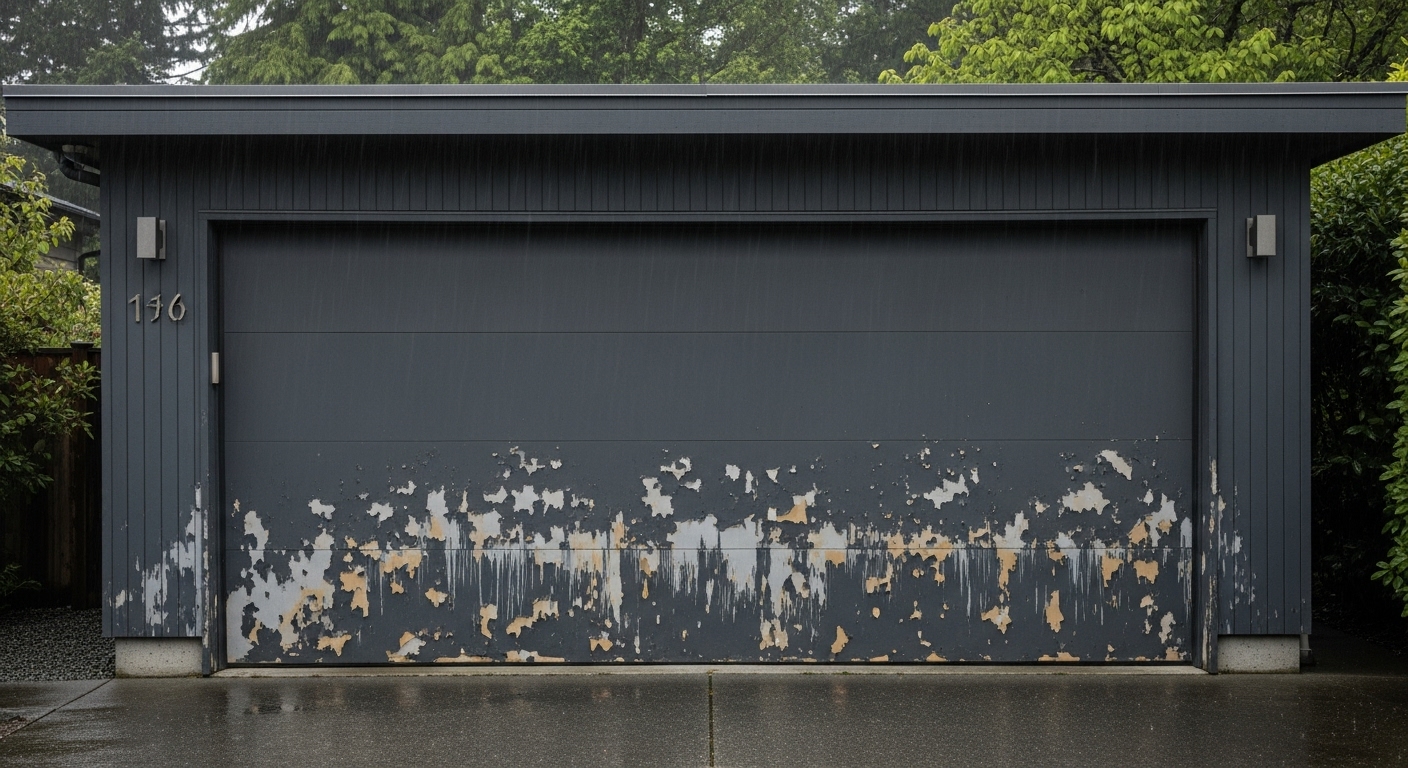
Let’s get real about what Vancouver’s weather does to your garage door. Living here means dealing with a temperate oceanic climate that sounds lovely in travel brochures but creates absolute havoc for exterior paint finishes. We’re talking about a city where it rains for what feels like nine months of the year, humidity levels that would make a tropical rainforest jealous, and temperature swings that keep your garage door in a constant state of expansion and contraction stress.
The moisture situation in Vancouver is unlike anywhere else in North America. While other cities deal with seasonal humidity spikes, we maintain consistently high moisture levels in the air throughout most of the year. This means your garage door never really gets a break from moisture exposure. Even on those rare sunny days, the humidity lingers, and condensation forms as temperatures drop in the evening. It’s like your garage door is living in a perpetual state of being slightly damp, which is the absolute worst-case scenario for paint durability.
What makes this even more challenging is how Vancouver’s rain patterns work. We don’t just get those dramatic thunderstorms that dump water and move on. Instead, we get persistent, gentle rainfall that seems to penetrate every surface. This type of precipitation is particularly destructive to paint because it doesn’t just hit your garage door and run off – it seeps into every microscopic crack, gap, and imperfection in your paint finish. Over time, this constant moisture infiltration breaks down the molecular bonds between paint and substrate, leading to the spectacular failures we see so often.
The salt factor adds another layer of complexity that inland cities don’t have to deal with. Even though we’re not directly on the ocean like some coastal communities, Vancouver’s proximity to saltwater means our air carries enough salt particles to accelerate corrosion processes. These salt particles settle on your garage door surface and act like tiny moisture magnets, creating localized areas of intense corrosion activity. When combined with our high humidity, these salt deposits become corrosion catalysts that can turn minor paint chips into major rust problems in surprisingly short timeframes.
Temperature fluctuations might not seem dramatic in Vancouver compared to places like Calgary or Winnipeg, but the constant cycling between cool mornings and warmer afternoons creates thermal stress that’s particularly hard on paint films. Most people don’t realize that garage doors expand and contract with temperature changes, and paint needs to be flexible enough to accommodate these dimensional changes without cracking or peeling. In Vancouver, this thermal cycling happens almost daily throughout much of the year, creating cumulative stress that eventually overwhelms even high-quality paint formulations.
Weather Stripping: The Unsung Hero of Paint Protection
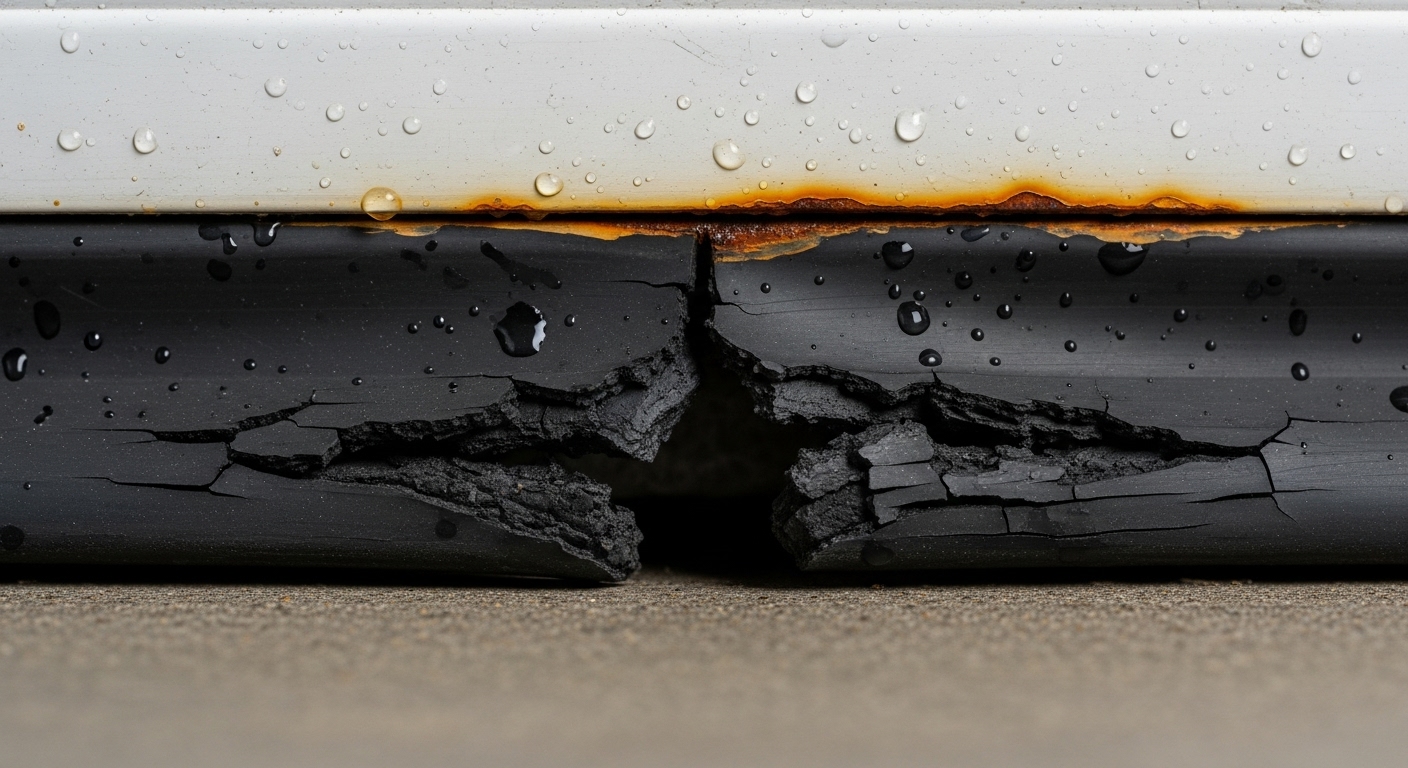
Before we dive into the technical details of weather stripping, let me share something that might surprise you – most garage door paint failures in Vancouver start with weather stripping problems, not paint quality issues. I’ve seen homeowners spend hundreds of dollars on premium paint only to watch it fail within months because they ignored the twenty-dollar weather seal at the bottom of their door. It’s like wearing a designer raincoat with holes in it and wondering why you’re getting wet.
Weather stripping serves as your garage door’s first line of defense against moisture infiltration. The system typically consists of a structural support component made from PVC or aluminum and a flexible rubber strip that creates the actual seal. This rubber component is where most problems start because it has to maintain flexibility while being constantly exposed to UV radiation, temperature extremes, and the physical stress of door operation. In Vancouver’s climate, these rubber seals face the additional challenge of constant moisture exposure, which accelerates degradation.
Recognizing when your weather stripping needs replacement is crucial for preventing paint problems. Visible cracks in the rubber, a dried-out or brittle appearance, color fading or discoloration, and that droopy, saggy look are all clear indicators that your weather seal has lost its structural integrity. When weather stripping fails, water doesn’t just drip into your garage – it pools at the base of your door and creates the perfect conditions for rust formation and paint failure. This pooled water can freeze during Vancouver’s winter months, potentially damaging your door opener and creating expensive repair scenarios.
The physics of how failed weather stripping destroys paint is actually quite fascinating. When water gets past your weather seal, it doesn’t just sit on the surface of your garage door. Instead, it migrates behind the paint film through microscopic gaps and begins to accumulate. As more water infiltrates, it creates hydrostatic pressure that literally pushes the paint away from the substrate. This is why you often see paint failures that start at the bottom of garage doors and work their way up – it’s water following gravity and finding the path of least resistance behind your paint film.
Modern solutions for weather stripping problems go beyond simply replacing the rubber strip. Installing a storm shield threshold seal creates an artificial slope that prevents water from entering the garage and pooling under the door. This approach addresses the root cause of water accumulation rather than just trying to seal it out. For Vancouver homeowners dealing with ice formation during winter months, applying silicone-based weather stripping lubricant helps water bead up and prevents ice from bonding to the door surface.
The side and top weather stripping components deserve attention too, especially the seals between garage door panels. Many modern doors feature triple-contact Interlok joints that prevent air, light, and water from passing between panels. When these seals fail, the entire door often requires replacement because they’re integrated into the door structure during manufacturing. This is why regular inspection and maintenance of all weather sealing components is so critical – catching problems early can save thousands in replacement costs.
The Science Behind Paint Failure: Understanding Peeling and Bubbling
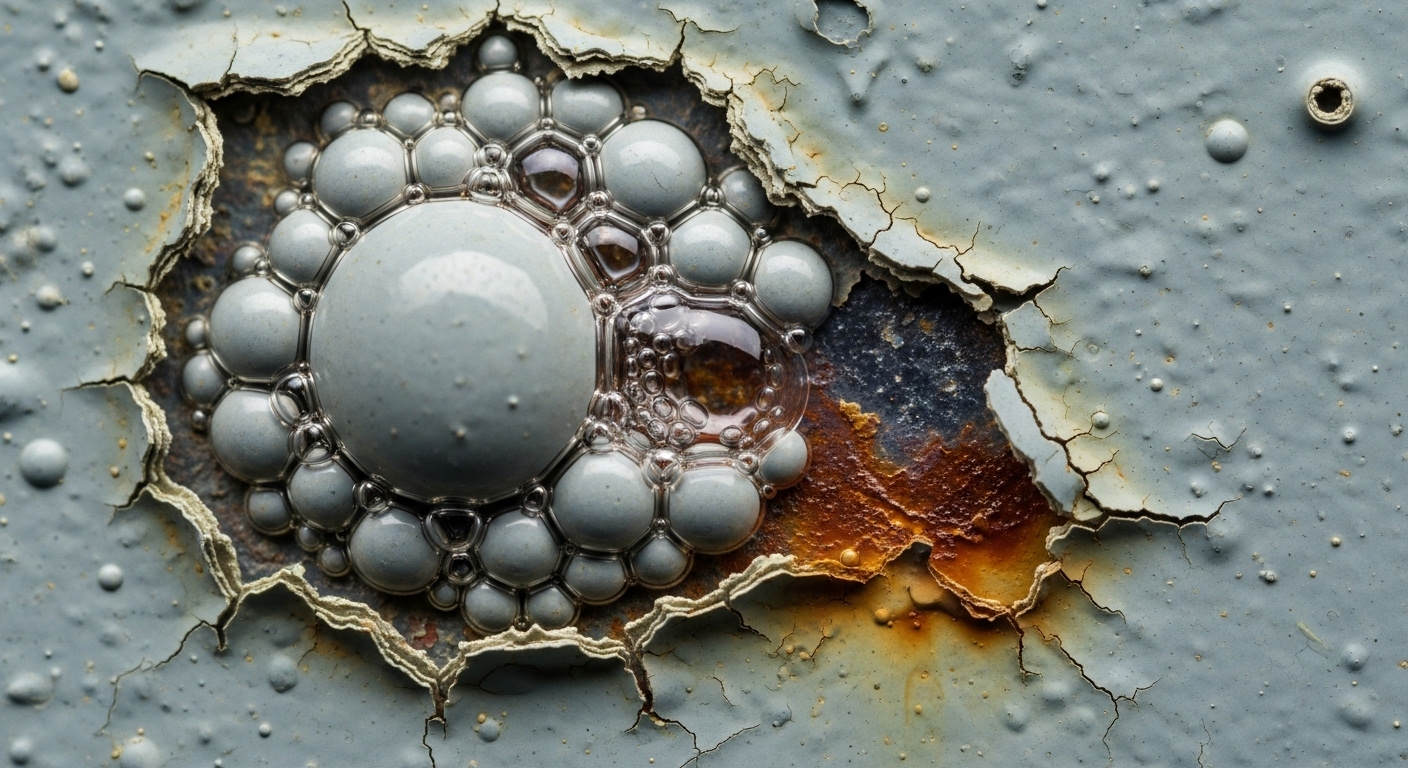
Paint failure isn’t mysterious once you understand the science behind it, but it’s more complex than most homeowners realize. When we talk about paint peeling and bubbling, we’re really discussing the breakdown of molecular bonds between the paint film and the substrate. In Vancouver’s climate, this breakdown happens faster and more dramatically than in drier regions because moisture acts as a catalyst for nearly every type of paint failure mechanism.
Paint peeling occurs when the adhesive bond between paint and substrate fails completely, allowing sections of paint to separate and fall away from the surface.

