
Thinking about replacing your garage door or making some repairs? You might be wondering whether you need to get the city involved with permits and inspections – and trust me, this isn’t something you want to mess up!
Look, I get it. Dealing with permits feels like such a hassle, especially when you just want to fix that squeaky door or upgrade to something that actually opens without making the whole neighborhood cringe. But here’s the thing about Vancouver garage door permits: the line between “just maintenance” and “you definitely need city approval” is way blurrier than most homeowners realize. From what I’ve learned diving deep into this topic, the City of Vancouver takes garage door work pretty seriously, and understanding when you need permits versus when you don’t can save you from some seriously expensive headaches down the road.
The reality is that some garage door projects sail through without any regulatory oversight, while others require full permitting, inspections, and compliance with building codes. Getting this wrong can cost you double the permit fees in penalties, force you to tear out completed work, or even mess with your home insurance coverage when you need it most.
Key Outtakes:
- Simple maintenance like lubrication, weather seal replacement, and hardware tightening doesn’t require permits, but structural changes or new electrical installations definitely do
- The City of Vancouver requires permits for any work that involves “building or altering a garage,” which can include comprehensive door replacements and frame modifications
- Installing a new motorized garage door opener triggers electrical permit requirements, even if the door itself might not need permits
- Unpermitted work when permits are required results in double permit fees as penalties, plus potential insurance complications and home sale difficulties
- Fire separation requirements for attached garages add another layer of complexity that many homeowners overlook
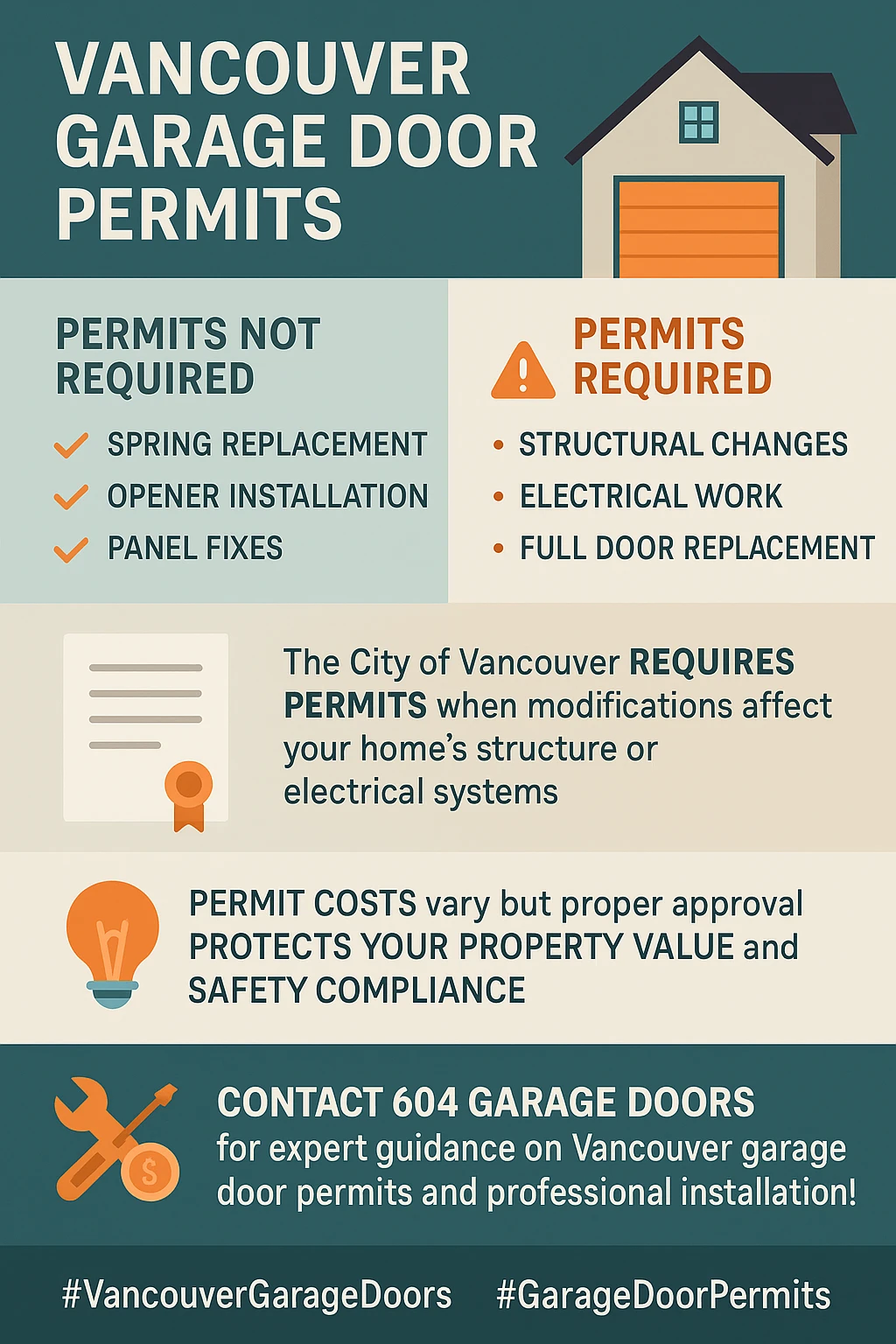
When Vancouver Requires Garage Door Permits
Here’s where things get interesting – and honestly, a bit confusing for most homeowners. The City of Vancouver doesn’t just hand out a simple yes/no list for garage door work. Instead, they focus on the scope and impact of what you’re actually doing to your property.
According to Vancouver’s official building permit guidelines, any work that involves building or altering a garage requires a permit. This sounds straightforward until you start asking what exactly counts as “altering.” If you’re just swapping out an old garage door for a new one of the exact same size, using the existing frame and hardware, you might think you’re in the clear – but it’s not always that simple.
The permit requirement gets triggered when your project involves structural changes to the garage opening, modifications to the frame or support system, electrical work for new motorized systems, or changes that affect fire separation requirements (especially important for attached garages). What catches a lot of people off guard is that even seemingly straightforward door replacements can cross into permit territory if they involve any of these elements. I’ve seen homeowners get surprised when their “simple” door upgrade suddenly needed city approval because they decided to go with a heavier door that required frame reinforcement or wanted to add smart opener technology.
Garage Door Work That Doesn’t Need Permits
Before you start panicking that every little garage door tweak needs city approval, let me reassure you – there’s plenty of maintenance and minor repair work you can do without getting permits involved. Vancouver explicitly recognizes that routine maintenance keeps properties in good condition and shouldn’t require regulatory oversight every time you need to oil a hinge.
The maintenance activities that don’t require permits include lubrication and cleaning of moving parts, tightening hardware like bolts and screws, replacing non-load-bearing components like rollers or hinges, installing weather seals and threshold sweeps, and basic adjustments to spring tension (though be super careful with springs – they’re dangerous). These represent the kind of regular upkeep that responsible homeowners do to keep their garage doors functioning properly and lasting longer.
What’s really important to understand is that even though these activities don’t require permits, they still need to meet safety standards and building codes. Vancouver makes this clear: work exempt from permits still needs to meet building code requirements. So while you don’t need city approval for routine maintenance, you can’t just wing it and ignore safety considerations. This is particularly important when dealing with garage door springs and cables, which can seriously injure someone if they’re not handled properly.
The Electrical Component Complication
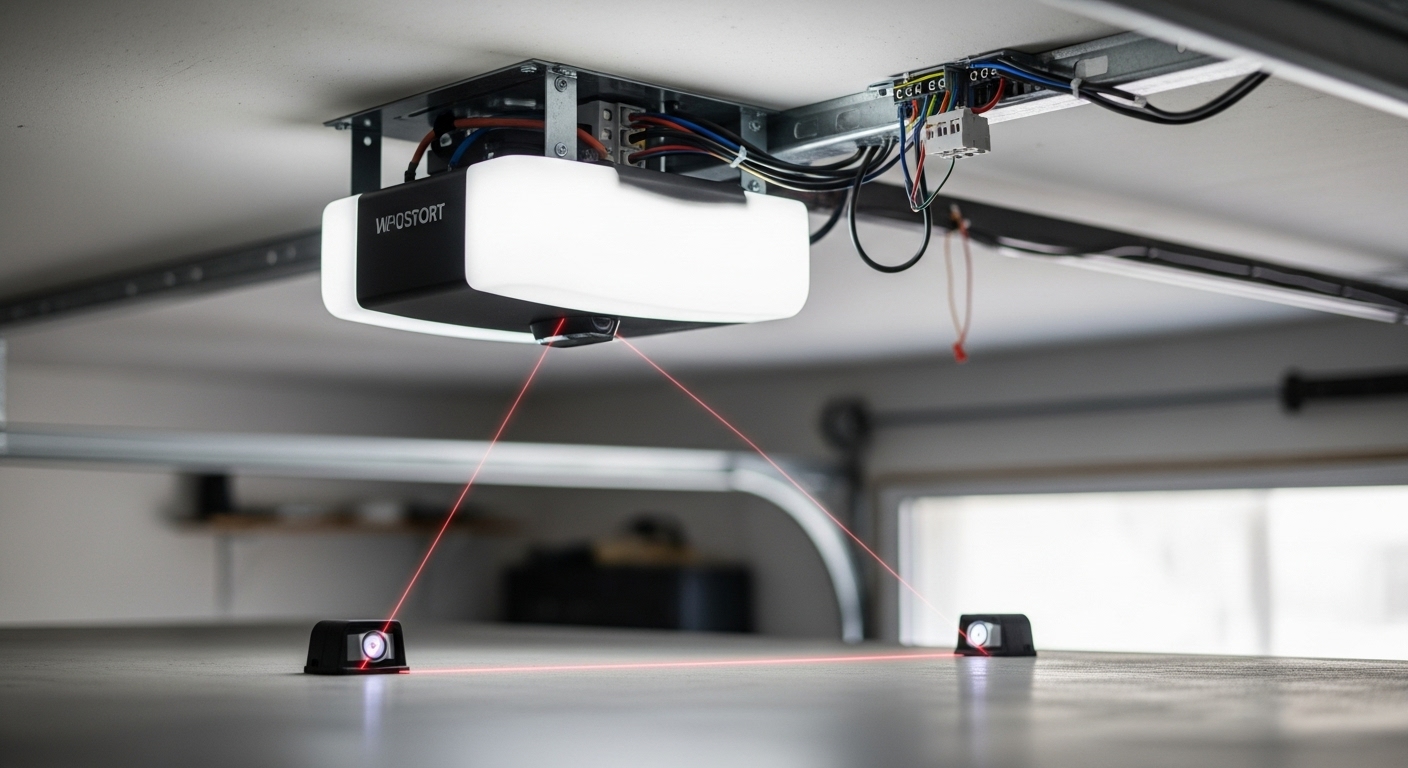
Now here’s where things get really specific, and it’s something that trips up a lot of homeowners: any electrical work related to your garage door project almost certainly requires permits, even if the door itself might not. Installing a new garage door opener isn’t just about mounting some hardware – it involves electrical connections that Vancouver treats as significant installations requiring professional oversight.
The City of Vancouver requires electrical permits for pretty much all electrical work except replacing defective fuses, receptacles, switches, or bulbs with similar components. Since installing a garage door opener involves new electrical connections, dedicated circuits, and safety systems like photo sensors and emergency release mechanisms, it definitely falls into permit territory. This means that even if your garage door replacement might theoretically not need a building permit, adding motorization to the system triggers electrical permitting requirements.
What makes this particularly important is the safety standards involved. Modern garage door openers must meet UL 325 standard requirements, which include automatic reversing mechanisms, entrapment prevention features, and proper sensor installation. These aren’t just nice-to-have safety features – they’re mandatory components that require professional installation and inspection to ensure they work correctly. I’ve heard horror stories about DIY opener installations where the safety sensors weren’t properly calibrated, creating serious injury risks for families with children.
Fire Safety Requirements for Attached Garages
If your garage is attached to your house, there’s a whole additional layer of regulation that many homeowners completely overlook: fire separation requirements. This is one of those areas where Vancouver building codes get really specific, and for good reason – attached garages present unique fire risks that need to be managed through proper construction and maintenance.
Vancouver requires fire-rated separation between attached garages and living spaces, typically with a minimum one-hour fire resistance rating. This affects not just the walls between your garage and house, but also any doors connecting these spaces (which should be fire-rated solid-core doors), proper sealing of gaps or penetrations in separation walls, and maintenance of fire-rated assemblies during any renovation work. When you’re working on garage doors in attached garages, inspectors will verify that your project doesn’t compromise these fire safety features.
What this means practically is that even projects that might seem simple can trigger additional requirements if they affect fire separation. For example, if you’re upgrading to a larger garage door that requires modifications to the wall framing, you need to ensure that any fire-rated wall assemblies remain intact and properly rated. The Vancouver Building By-law includes specific provisions for garage fire separation that can add complexity and cost to projects that initially seemed straightforward.
Understanding the Permit Application Process
Once you’ve determined that your garage door project needs permits, navigating Vancouver’s application process has actually gotten more streamlined in recent years, though it still requires attention to detail and patience. The city has moved to electronic submission for most permits, which eliminates some of the old frustrations around waiting in line at city hall, but it also means you need to have all your documentation properly prepared in digital format.
The first step involves determining exactly what permits you need. Vancouver operates the Development and Building Services Centre at 515 West 10th Avenue, and they’re genuinely helpful when you’re trying to figure out your specific requirements. They’re open Monday, Wednesday, and Friday from 8:30am to 4:30pm, and Tuesday and Thursday from 8:30am to 4pm. When I was researching this topic, I found that calling them directly saves a lot of guesswork about whether your particular project triggers permit requirements.
For garage door projects specifically, you’ll need to submit architectural site plans showing the location of your proposed work, scaled at not less than 1/8″ = 1’0″. These plans need to include your address, legal description, north arrow, property dimensions, and the location of existing or proposed driveways. If your project involves any roof modifications or drainage considerations, those need to be clearly indicated and designed to comply with Vancouver’s plumbing by-law requirements. The level of detail required can feel overwhelming at first, but it’s designed to ensure that inspectors understand exactly what you’re proposing to do.
Permit Fees and Timeline Expectations
Let’s talk about the financial reality of Vancouver garage door permits, because understanding the costs upfront helps you budget appropriately for your project. Vancouver calculates permit fees based on the estimated value of your construction work, using their 2025 Schedule of Development and Building Related Fees. For most garage door projects, you’re looking at fees ranging from several hundred dollars for minor work to several thousand for comprehensive garage installations or major renovations.
The city charges base fees plus additional incremental amounts for higher-value projects, and they estimate the total project cost themselves rather than simply accepting your contractor’s quote. This can sometimes result in higher fees than homeowners expect, particularly if the city’s cost estimates exceed what you’re actually paying. Processing timelines vary significantly based on project complexity, but Vancouver aims for faster approvals under their improvement initiatives, with simple projects potentially approved within days and more complex projects taking several weeks to several months.
The Real Consequences of Skipping Required Permits

This is where I need to get serious with you about why understanding permit requirements really matters. Skipping permits when they’re required isn’t just about potential fines – it creates cascading problems that can affect your insurance coverage, property value, and ability to sell your home down the road.
Vancouver imposes a “work without permit” penalty that typically doubles the original permit fee, but that’s just the beginning of your problems. If the city discovers unpermitted work, all construction must stop immediately while you go through the permit application process. This means you could be halfway through your project, having already paid for materials and contractor labor, and then face weeks or months of delays while permit applications are processed. You still have to pay all the original permit fees and processing costs, essentially paying twice for the privilege of doing things in the wrong order.
The insurance implications are particularly scary. Many homeowner insurance policies explicitly require that major renovations be properly permitted and inspected. If you file a claim related to garage door damage or malfunction, and the insurance company discovers that the installation wasn’t properly permitted, they can deny your claim entirely. This means that if your garage door fails and damages your car, or if electrical problems with an unpermitted opener cause a fire, you could be completely on your own financially. Even worse, some insurance companies will void your entire policy if they discover significant unpermitted work, leaving you unprotected against all types of property loss.
Home Sale Complications
When you eventually decide to sell your home, undisclosed unpermitted work creates serious legal and financial headaches. Home inspectors routinely identify unpermitted work during pre-purchase inspections, and real estate laws require disclosure of this information to prospective buyers. Once buyers know that work was done without permits, they typically become nervous about what other corners might have been cut and what hidden problems might exist.
Even if buyers don’t walk away from the sale entirely, they usually demand substantial price reductions to compensate for the risk and hassle of dealing with unpermitted work. Legal experts note that unpermitted work can create significant complications during real estate transactions, often resulting in much larger financial losses than the original permit costs would have been. Some buyers will require that you obtain retroactive permits and inspections before completing the purchase, which can delay closing and add substantial unexpected costs to your sale process.
Professional Installation and Safety Standards
Whether your garage door project requires permits or not, safety should be your top priority, and this usually means working with properly licensed and insured contractors who understand Vancouver’s specific requirements. Garage doors and their associated systems involve significant safety risks – from heavy springs under extreme tension to electrical components that can cause fires if improperly installed.
Professional contractors familiar with Vancouver’s building codes understand the nuances of permit requirements, know what city inspectors expect to see, and can avoid costly mistakes that delay projects or require expensive rework. When interviewing contractors, ask specific questions about their permit experience, familiarity with Vancouver’s Building By-law, and understanding of inspection requirements. Reputable contractors will proactively explain permit requirements rather than suggesting that permits can be avoided when they’re actually required.
For motorized garage doors specifically, proper installation involves more than just mounting hardware and connecting wires. Modern garage door openers must meet UL 325 safety standards, which include automatic reversing mechanisms if the door encounters obstructions, photo-electric sensors to detect objects in the door’s path, and emergency release mechanisms that allow manual operation during power outages. These safety features require professional calibration and testing to ensure they function correctly and protect your family from injury.
Regional Climate and Design Considerations
Living in Vancouver means dealing with specific climate conditions that affect garage door selection and installation requirements. While we don’t face the hurricane-force winds that require special impact-resistant doors in some regions, Vancouver’s wet climate, temperature variations, and seismic activity create their own set of considerations that influence both permit requirements and practical installation choices.
The 2021 International Residential Code includes new provisions requiring garage doors to be tested and labeled for wind load resistance, even in moderate climate zones like Vancouver. Garage doors must now be labeled with permanent manufacturer labels identifying design wind pressure ratings, model information, and applicable test standards. While Vancouver’s wind conditions are generally moderate, these requirements ensure that garage doors can withstand the occasional severe weather events that are becoming more common with climate change.
Vancouver’s wet climate also makes proper installation and weatherproofing particularly important. Garage doors need adequate weatherstripping, proper drainage systems, and corrosion-resistant hardware to withstand our rainy seasons. Poor installation that doesn’t account for water infiltration can lead to structural damage, mold problems, and premature hardware failure. Professional installers familiar with local conditions understand these considerations and can recommend appropriate materials and installation techniques.
Cost-Benefit Analysis of Proper Permitting
When homeowners complain about permit costs, I understand the frustration – paying several hundred or even several thousand dollars in fees feels like a significant expense on top of already substantial project costs. But looking at the financial picture from a long-term perspective, proper permitting represents protection for your property investment rather than an unnecessary expense.
Consider the alternative: unpermitted work that results in insurance claim denial could cost tens of thousands of dollars if garage door failure causes property damage or injury. Home sale complications due to undisclosed unpermitted work often result in price reductions that exceed the original permit costs by orders of magnitude. Having to tear out and replace improperly installed work detected during inspections can double or triple your total project costs.
Professional contractors also emphasize that permitted work provides legal protection and recourse if problems develop after installation. When work is properly permitted and inspected, you have documented evidence that the installation meets code requirements, which can be crucial for insurance claims, warranty disputes, or liability issues. Vancouver’s permitting improvement program aims to make the process more efficient while maintaining safety standards, recognizing that proper oversight benefits everyone in the long run.
Frequently Asked Questions
Do I need a permit to replace my garage door in Vancouver?
It depends on the scope of your replacement project. If you’re simply replacing an existing garage door with a new door of the same size and type, using the existing frame and hardware, permit requirements may be less clear-cut. However, if your replacement involves changing the structural opening size, modifying the frame or support structure, installing a motorized opener where none existed, or affecting fire-rated assemblies in attached garages, permits are definitely required.
The safest approach is to contact Vancouver’s Development and Building Services Centre at 515 West 10th Avenue to verify requirements for your specific situation. They can review your project details and provide clear guidance about whether permits are necessary, potentially saving you from expensive penalties and complications later.
What happens if I install a garage door opener without an electrical permit?
Installing a motorized garage door opener without the required electrical permit can result in serious consequences. Vancouver requires electrical permits for all electrical work beyond replacing defective components of similar type and rating, and garage door opener installation definitely qualifies as significant electrical work requiring professional oversight.
If discovered, unpermitted electrical work typically results in a doubled permit fee as penalties, immediate work stoppage orders, and potential requirements to tear out and reinstall work to meet code requirements. More importantly, unpermitted electrical work can void your homeowner insurance coverage and create serious safety risks if the installation doesn’t meet UL 325 safety standards for automatic reversing mechanisms and entrapment prevention features.
How long does it take to get a garage door permit approved in Vancouver?
Processing timelines vary based on project complexity and application completeness. Vancouver aims for faster approvals under their 3-3-3-1 Permit Approval Framework, with simple projects potentially approved within three days. However, these represent aspirational targets rather than guaranteed timelines, and more complex projects typically require several weeks for review and approval.
Major projects or those requiring engineering review can take 6-8 weeks or more, while projects involving variances or heritage considerations might extend to several months. The key to faster processing is submitting complete applications with all required documentation upfront, as incomplete submissions create substantial delays when reviewers request additional information.
Can I do my own garage door maintenance without permits?
Yes, routine maintenance activities don’t require permits in Vancouver. This includes lubrication of moving parts, tightening hardware, replacing non-load-bearing components like rollers, installing weather seals, and basic cleaning and adjustments. These maintenance activities help preserve your garage door’s condition and extend its lifespan without triggering regulatory oversight.
However, it’s important to understand that even maintenance work must meet safety standards and building code requirements. Be particularly careful with garage door springs and cables, which are under extreme tension and can cause serious injury if handled improperly. If you’re unsure whether specific maintenance tasks are safe to perform yourself, consult with a professional garage door technician.
Wrapping Up
Navigating Vancouver’s garage door permit requirements doesn’t have to be overwhelming once you understand the key distinctions between routine maintenance and work requiring city approval. The bottom line is that simple upkeep like lubrication and weather seal replacement falls outside permit requirements, while structural modifications, electrical installations, and comprehensive replacements typically need proper authorization. When in doubt, contacting the Development and Building Services Centre saves you from costly mistakes and ensures your project proceeds smoothly. At 604 Garage Doors, we understand these regulatory complexities and work with homeowners throughout Vancouver to ensure their garage door projects meet all applicable requirements while delivering the functionality and reliability they expect – because protecting your investment and your family’s safety is always worth doing right the time.

